A single full size cable reel can weigh more than five tonnes. Move it wrong and you risk crush injuries, damaged flanges, broken conductor, and a workplace insurance claim that dwarfs the cost of the reel itself. Move it right and you turn a notorious bottleneck into a routine, single operator task.
This guide explains the cable reel handling equipment available in 2026, how to choose between battery and pneumatic options, and which industries benefit most from upgrading from chains, slings and forklift improvisation to purpose engineered reel pushers and turners.
What counts as cable reel handling equipment?
The term covers any equipment used to lift, rotate, transport or position cable and wire reels, whether they are made of steel, wood or plastic. The most common categories are:
- Reel jacks and stands, which lift a reel off the floor and allow it to free spin for payout.
- Reel rollers, which support the reel horizontally so cable can be pulled off without manual rotation.
- Cable reel turners, which rotate or reorient a flanged reel from horizontal to vertical or vice versa.
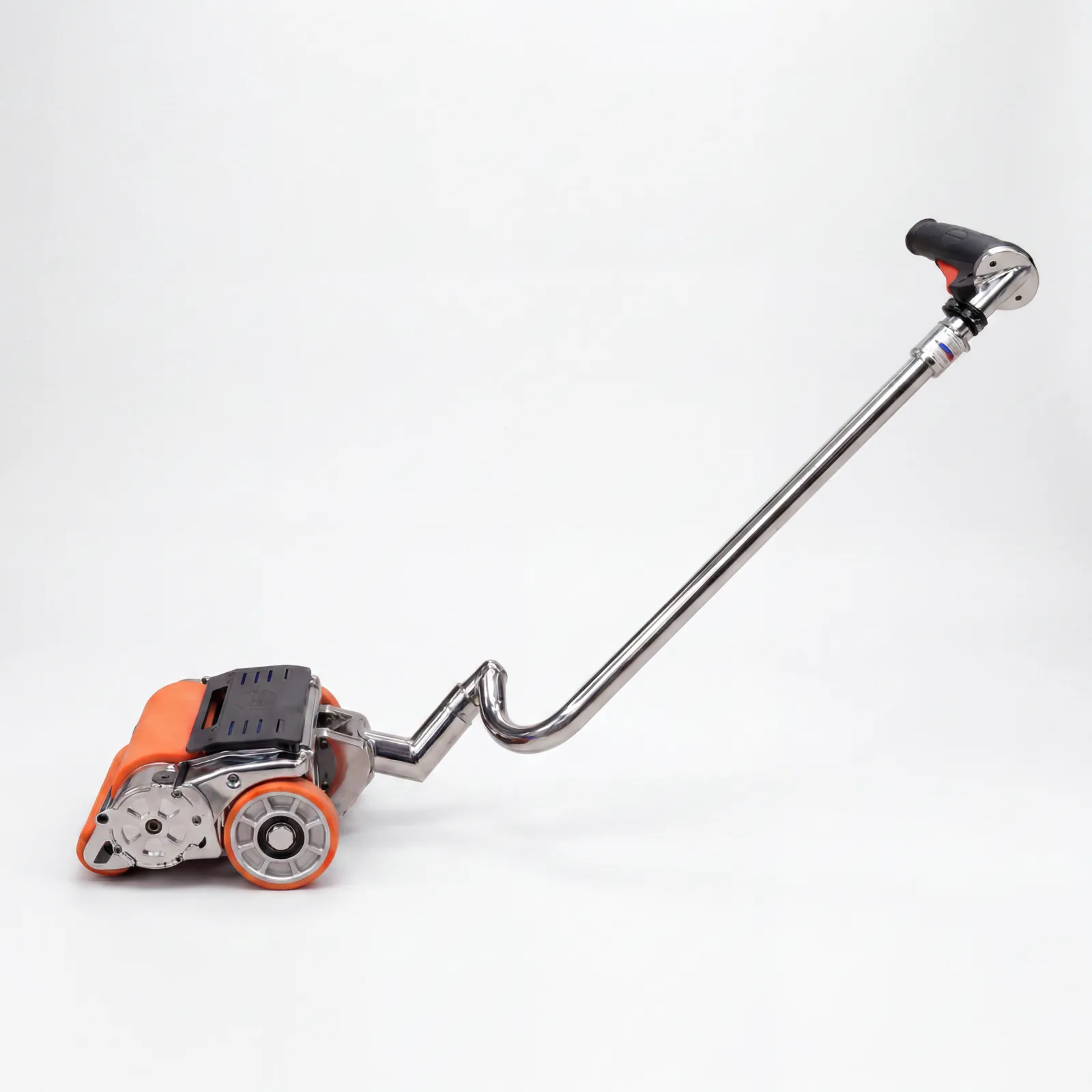
- Reel pushers (powered reel movers), walk behind machines that grip the back of the reel and use a powered drive wheel to push, pull and manoeuvre the reel across the floor.
- Reel trailers and transporters, larger battery powered units that drive under a reel and lift it for short distance internal transport.
For the day to day movement of heavy reels inside a cable factory, a telecoms depot or a utility yard, the powered reel pusher is the most flexible single piece of equipment you can specify.
Why traditional reel handling causes injuries
Three practices still common in cable handling create most of the risk:
- Manual rolling. Two or three operators tipping a 2,000 kg reel onto its flange and rolling it across the floor. Crush injuries, foot injuries and back strains follow.
- Forklift improvisation. Lifting a reel by hooking the forks through the core. The reel is unstable, the load is offset, and tip overs are common.
- Chain and crane handling. Using overhead cranes with slings to lift reels. Effective but slow, fixed to one location, and a serious crush hazard if a sling slips.
UK manual handling regulations, OSHA general duty provisions, and modern insurance underwriters all expect employers to design these tasks out wherever practicable. A powered reel pusher does exactly that: the operator never lifts, never rolls, and never relies on slings.
How a powered cable reel pusher works
A powered reel pusher contacts the outer flange of the reel with a large, urethane bonded drive roll. The operator engages a variable throttle on a swivel handle, and the drive roll rotates the reel about its own axis, walking it forward across the floor. The reel never leaves the ground. The operator never carries the load.
The two main options are:
- Battery powered reel pushers with drop in NiMH or lithium ion battery packs. Powerhandling's PowerRoll L Series moves reels of up to 80,000 lb (around 36,287 kg), the G Series up to 75,000 lb (around 34,019 kg) on a single charge, and both offer drop in battery replacement so operations continue while a depleted battery charges off machine.
- Pneumatic reel pushers that run from compressed air. The PowerRoll A Series moves cable reels of up to 62,000 lb (around 28,123 kg) with no battery, ideal for plants where compressed air is plumbed everywhere and continuous duty is expected.
Powerhandling's patented Direct Drive design houses the motor and gearbox inside the drive roller, which the company states improves reliability, reduces overall size, and eliminates any drive related maintenance.
Choosing the right cable reel handling equipment
Five practical questions narrow the choice quickly.
1. What is the maximum loaded reel weight?
Specify against the heaviest reel you handle in a typical year, not the average. Powerhandling's range spans 10,000 lb (V Series) to 80,000 lb (L Series) for cable reels.
2. Steel, wood or plastic flanges?
Wood and plastic flanges are softer and need a drive roll with a larger contact area and lower point loading. Steel flanges can take more aggressive contact.
3. Compressed air available, or battery preferred?
If your facility already runs compressed air at 7 to 8 bar (101 to 116 PSI) and 1,500 lpm (53 cfm), pneumatic units (A Series) give continuous duty operation with no batteries to manage. If your operation moves between sites, batteries are the obvious choice.
4. How tight is the working space?
Reel pushers fitted with a swivel pivot handle can manoeuvre between closely arranged reels, pull reels away from walls, and extract reels from inside machinery where access from the back is impossible.
5. Do you also need to turn or reorient reels?
A reel pusher pushes and pulls. A dedicated cable reel turner rotates or reorients flanged reels, for example flipping a reel from horizontal transport position to vertical payout. Most cable factories run both.
Industries that benefit
Powered cable reel handling equipment is used across:
- Cable and wire manufacturers moving reels of steel, copper and aluminium conductor between extrusion, armouring and spooling lines.
- Telecoms and fibre optic contractors handling fibre drums between yard, vehicle and pulling location.
- Utility companies and electrical contractors handling MV and HV reels on substations, transformer sites and overhead line projects.
- Wind and solar EPCs moving collection cable drums on construction sites.
- Defence and rail moving heavy specialist drums in maintenance facilities, hangars and depots.
FAQ
What is the safest way to move a heavy cable reel?
Use a powered, pedestrian operated reel pusher that grips the reel flange and walks the reel forward on its own circumference, keeping the load on the ground and removing the need for slings, chains or forklift improvisation.
Can one person move a cable reel?
Yes. A correctly specified battery or pneumatic reel pusher allows a single operator to move cable reels of up to 36,287 kg (80,000 lb) safely.
Do you need a licence to operate a cable reel mover?
No. Pedestrian operated reel pushers do not lift loads and are not covered by LOLER in the UK. Brief task specific training is sufficient.
How long does a battery powered reel mover last on one charge?
Powerhandling's drop in NiMH and lithium ion battery packs typically deliver runtimes that exceed an eight hour production shift, with rapid swap to a spare battery to maintain uptime.
What is the difference between a reel pusher and a reel turner?
A reel pusher moves the reel across the floor. A reel turner rotates or reorients a flanged reel, for example from horizontal to vertical orientation. Many facilities use both.
Move cable reels safely with Powerhandling
For more than 20 years Powerhandling has engineered compact, powerful, single operator reel pushers, used by cable manufacturers, telecoms contractors and utility companies in 86 countries. Whether you need a battery powered solution for a multi site fibre operation or a pneumatic unit for continuous duty cable manufacturing, we can specify, demonstrate and deliver the right equipment for your application.
Request a free, no obligation demonstration at your facility through the contact form on powerhandling.com, or call our EMEA office on +351 210 909 000. You may also be interested in our cable reel turner and Cable Chocks accessories.
See Our Equipment in Action
Book a demo at your facility and see our equipment in action.
Request Your Demo
Tell us what you're moving and how heavy it is. We'll arrange a demo of the right machine at your facility.
Request Your Demo